
Holborn Painters & Decorators
Chambers & commercial programmes
A Holborn practice often needs two decisions kept apart: which rooms can be decorated, and which hours those rooms can actually be released. These notes separate chamber and office decoration from out-of-hours commercial painting, so the brief matches the instruction you are entitled to give.
Discuss your project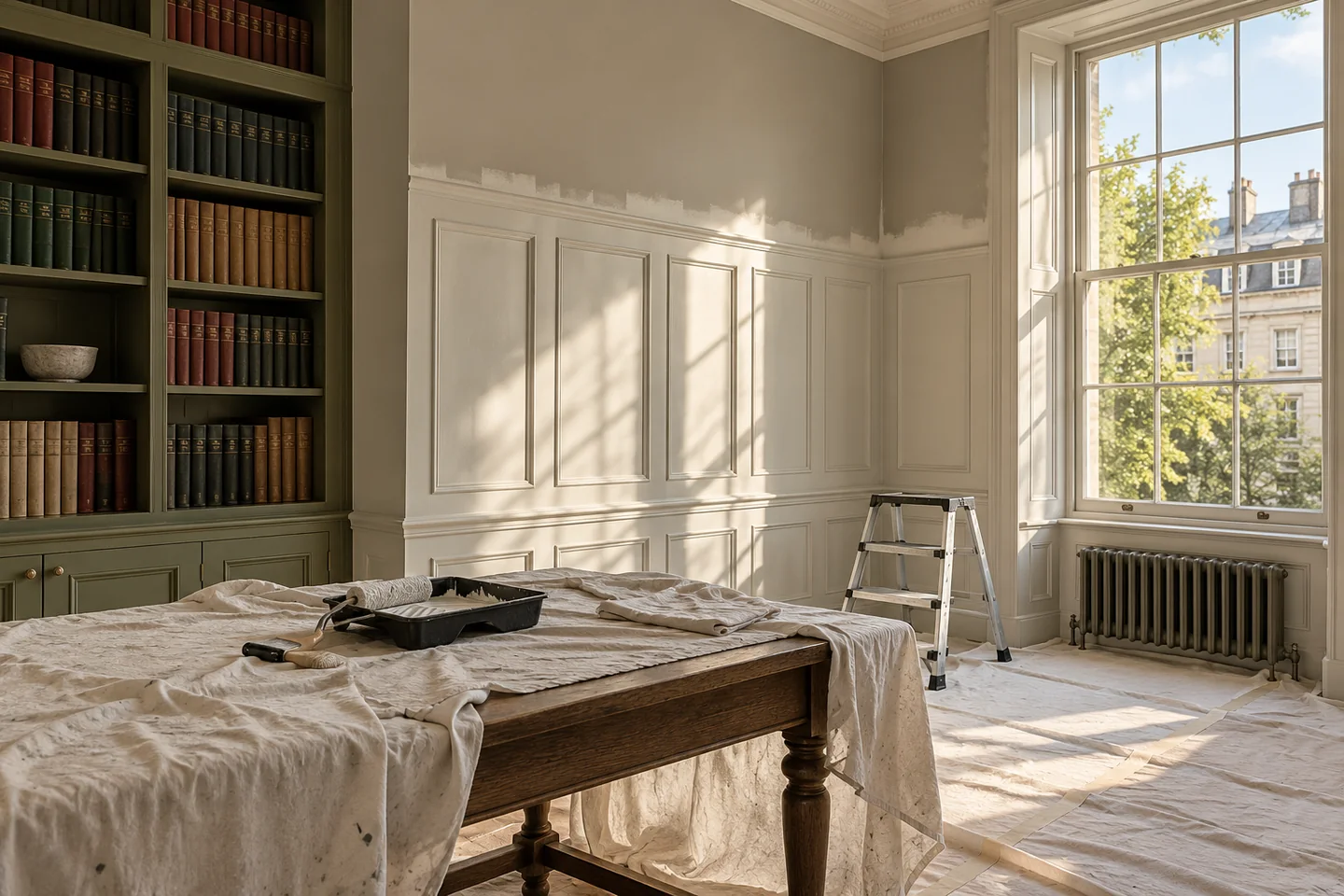
Services in this group
Chambers & professional offices
A consultation room in Holborn must feel composed when the door closes. We plan decoration for chambers and professional offices around the room’s proportions, retained joinery and the practical demands of the people working there.
Chambers & professional offices 02Out-of-hours commercial painting
Keeping a Holborn practice operational starts with a clear division between the space in use and the space being decorated. We discuss evening, weekend and phased programmes around that boundary, with the working conditions agreed before dates are confirmed.
Out-of-hours commercial paintingWhat each note is willing to describe
Chambers and professional-office decoration is the note for rooms a practice occupies and can name. A clerk’s room, a consultation room, a library, a reception and any circulation the set itself controls belong here, together with the painted joinery inside them. Panelling, fitted shelves, shutters and the sash on the room side are separate finish decisions, because a wall colour does not say how a moulding should be prepared or who empties a bookcase. The out-of-hours commercial note starts from the other end of the same building. It asks which space must be usable again, which preparation is too noisy or too dusty for the session on offer, and how ventilation and the gap before another coat sit inside the hours the building will allow. A floor on Kingsway, where the conservation statement describes Edwardian and later buildings and Portland stone frontages, can still need that programme note when the stone itself is outside the scope and the work is an interior repaint after other trades. Read the chambers note when the open question is the room. Read the commercial note when the open question is the session.
Where one instruction ends and the next begins
The boundary is the decision, not the postcode. If you can say which room closes, which shelves the practice’s own staff will clear, and who may approve colour and sheen under that room’s light, you are in the chambers note even if you hope the work will happen on a Saturday. If you already know the surfaces and the unresolved point is whether sanding can share an evening with people still in the building, you are in the out-of-hours note even if the room is a panelled consultation room. The two notes meet when a set of chambers wants both a careful interior and a diary that survives it. In that case send both, and do not collapse them into a single line that says “repaint the office out of hours”. Lincoln’s Inn describes chambers, commercial premises and residential flats on one estate, and it publishes its own policies for alterations and for working on site. Another Inn or a commercial landlord may issue different rules. Those rules can limit the entrance, the hours tins may pass the door, and whether a landing used by residents is available for preparation at all. The practice can release its rooms. It cannot, by that release alone, instruct the common stair or promise that a council will accept noisy work outside the published day.
Sources: Lincoln’s Inn: the estate
What to send so the quotation can follow the right note
For the chambers note, send the address, your role, and a room list written in the names the practice uses. Say which rooms contain retained panelling, shelves, shutters or a sash that is included, and which polished timber or stone must be protected and left unpainted. Name the colleague who can approve a sample, and the person who will look at the room before clients return. Add any estate paper you already hold about contractors or alterations, without treating it as a colour choice. For the out-of-hours note, send the same address and then the timetable: which space must reopen first, whether a morning meeting is immovable, and whether windows or the building’s ventilation can run after reception closes. Separate tasks you believe are quiet from tasks that raise dust or need a tower. Say who the keyholder is, which door and lift may be used, and where materials may stand without blocking a route that stays open. If decoration follows a fit-out, mark which partitions and ceilings are new and which finishes remain. A quotation can then show included preparation, the coats discussed, and the points still unknown. It should not invent a return time the product and the building have not been asked to support.
Holborn rooms where the split is easy to miss
Around the Inns, a consultation room can sit behind an entrance the estate controls, with homes or other sets using the same flights. The room note still describes panelling and shelves. The programme note still has to ask which tasks fit the session, because Camden and the City publish different arrangements for noisy building work, and either can require a further consent outside the ordinary day, on Sunday or on a bank holiday. The City also records that business quiet hours may narrow a weekday window. A building can be stricter than both. On Bedford Row, the list entry for 17 Bedford Row describes a townhouse used as offices, with a panelled entrance and stair hall. That example is a reason to look at the actual room, not a template for every tenancy. If the hall is common, it is not added to a chambers instruction merely because the offices upstairs are included. On a Kingsway side street the interior may be plainer than a Georgian set, yet the handover can be harder because a whole floor is expected back together. Say which part can return on its own. Where you are unsure which note fits, describe the room and the constraint in the same message. The reply can say which page should govern the specification.
Sources: Camden: noisy building works; City of London: construction noise; Historic England: 17 Bedford Row; Camden: Kingsway conservation statement
A Holborn decorating brief
Bring the rooms
into the conversation.
Tell us how the property is used, which surfaces need attention and who will approve the work. For an office, include the hours when rooms are available; for a home, let us know what will remain in place.
Describe the proposed work
Include the Holborn address, the rooms or frontage involved, and any restrictions set by the building manager.